

ABOUT APEX
ROPE INDUSTRIES

ABOUT APEX ROPE INDUSTRIES
At APEX we strive to offer high-quality products and services that align with the opportunities presented by our customers. Our mandate is to provide clients with competent rope access, rope rescue, and technical training specialists who can adapt to the variable demands of the industry and the clients we serve.
Our slogan: Access and Rescue Simplified is how we approach each opportunity. Our tailored solutions can make any scenario less complicated and keep everyone safe while working at height.

OUR COMMITMENT TO SAFETY
Goal Zero, everyone goes home is our commitment to safety. Whether you are employing use for projects or trusting us with your training needs, safety is top of mind.


FAQs
-
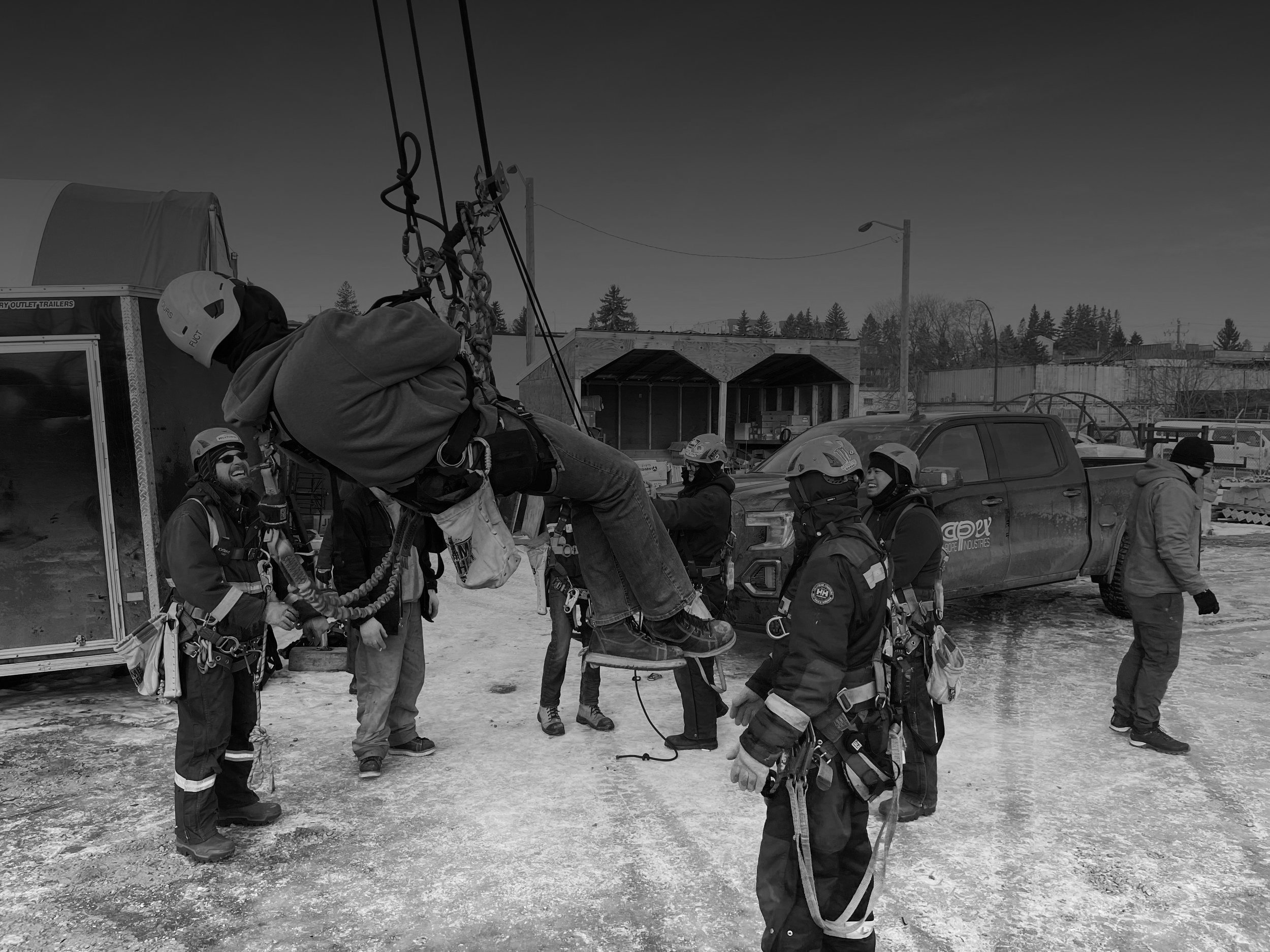
Rope access is a safe and efficient work positioning method for working at heights using ropes and harnesses. It’s widely used in industries like construction, energy, and maintenance for tasks such as inspections, repairs, and cleaning. Governed by IRATA and SPRAT, it minimizes setup time compared to scaffolding or lifts.
-
Rope access is very safe when proper training and protocols are followed. It uses redundant safety systems, strict certifications (IRATA/SPRAT), and regular equipment checks, resulting in fewer accidents than scaffolding or lifts.
-
Rope access saves money by reducing setup time, labour costs, and equipment expenses compared to scaffolding or lifts. It allows faster job completion with minimal disruption, requires fewer workers, and lowers maintenance costs. Plus, its efficiency reduces downtime for operations.